BUYING GUIDES
How to choose and care for a cutting board for an outdoor kitchen
Choose a cutting board for an outdoor kitchen with practical advice on size, materials, safe prep, cleaning, and storage.
The short answer
An outdoor board should be easy to stabilize, carry indoors, and clean after cooking. For a cutting board for an outdoor kitchen, portability and a safe raw-meat workflow matter as much as the material.
- Choose a board that fits the counter and leaves room to work.
- Use separate surfaces for raw meat and ready-to-eat foods.
- Keep wood out of prolonged sun, rain, and standing moisture.
- Wash promptly, dry both sides, and bring the board indoors.
- Pick grooves, handles, or nonslip feet only if they solve a real problem.
What does outdoor use demand from a cutting board?
Outdoor prep adds exposure to sun, heat, and changing conditions, so the board should be sturdy but easy to move inside when you are done. A dependable spot for chopping matters, too: a board that rocks or slides is a nuisance at best. A little planning lets you use the outdoor counter without treating the board like permanent patio equipment.
Sun, heat, and changing weather
A board left in direct sun or near a hot grill can warm up, while damp air or a sudden shower can leave it wet. Neither wood nor plastic is meant to serve as a permanently exposed outdoor fixture. Set the board out when you need it, keep it away from hot surfaces, and bring it under cover or indoors between tasks. That small habit is more useful than hoping a material will shrug off every change in weather.
A stable surface on outdoor countertops
Stone, stainless steel, and other smooth counters can be hard and slick under a board. Before chopping, check that the surface is level and dry; if the board shifts, place a slightly damp towel beneath it. Stability matters especially when you are cutting near a grill or carrying ingredients between stations. A steady cutting surface makes ordinary knife work safer and less frustrating.
Portability between the grill and prep area
An outdoor setup often spreads cooking across several spots, so a board should be manageable when loaded with ingredients. A compact board is easier to carry than a heavy block, though it gives you less working room. If you tend to prep at one counter and carve near the grill, consider whether finger grips or nonslip feet would help. Those features solve different problems: grips help with carrying, while feet help keep the board in place.
Which material works for outdoor prep?
Hardwood and plastic can both work for outdoor cooking, but neither should be left outside between meals. Hardwood offers a firm, knife-friendly prep surface; plastic can be practical when you want a separate board for raw proteins. Your choice comes down to the jobs you do most and how willing you are to wash and dry the board promptly.
Hardwood’s strengths and moisture limits
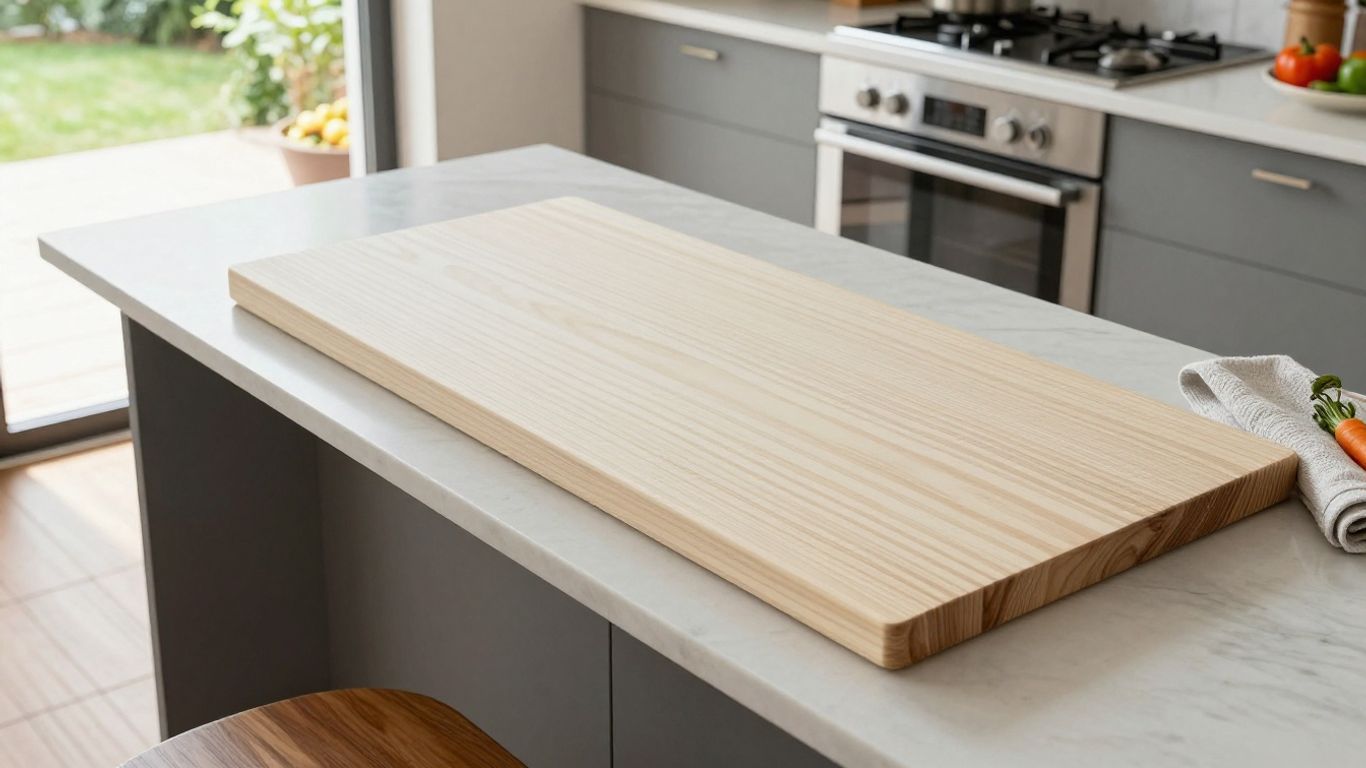
Hardwood gives you a substantial surface for chopping and slicing, but it needs sensible care around water. Avoid soaking it or leaving it exposed to wet weather, then wash and dry it after use. A wood board can be a pleasant contrast to a stone or metal outdoor counter, but it still belongs indoors when the meal is over. For more on using wood in an outdoor setup, see this guide to wood boards on outdoor counters.
Plastic’s convenience for raw meat
Plastic is an easy option for keeping raw meat separate from produce, bread, or cooked food. Its convenience does not remove the need to wash it thoroughly after use or replace it when deep grooves become difficult to clean. The simple comparison below can help you decide which surface fits each task.
| Material | Useful for | Keep in mind |
|---|---|---|
| Hardwood | General chopping and slicing | Wash promptly and dry fully |
| Plastic | A dedicated raw-meat board | Deep knife grooves need attention |
| Either | Outdoor prep when used carefully | Bring it inside after cooking |
The practical answer is often to keep separate boards for different jobs rather than asking one surface to handle everything. Follow the board maker’s care instructions, especially for plastic boards that may have specific washing guidance.
Why leaving any board outside is a bad idea
Outdoor exposure is hard to control: a board may get rained on, sit in hot sun, or collect dust and cooking residue. Even under a covered roof, temperature and humidity can change. Put the board away after cooking instead of relying on a cover to protect it indefinitely. A movable cutting board is a prep tool, not a built-in counter insert.
What size and features should you pick?
Choose a board that fits your counter while leaving space for a bowl, tray, or plate nearby. A larger surface reduces crowding during prep, but it is harder to lift and store. Measure the place you plan to work before buying, then consider the weight and features you will actually use.
Match board dimensions to your counter and cooking plans
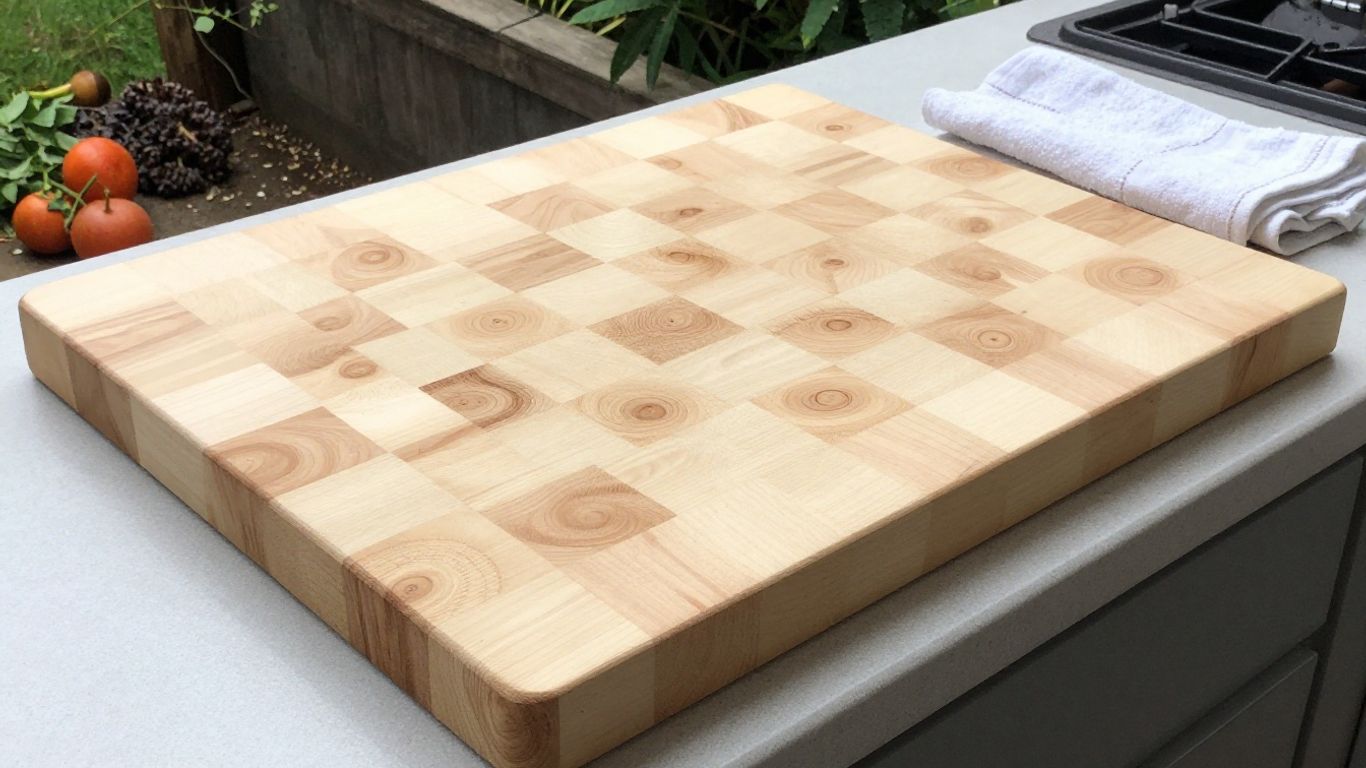
Measure the clear counter area, including the space needed to set down ingredients and move safely around the grill. If you regularly carve a roast or chop vegetables for several people, a cramped board can send scraps and juices over the edge. The End-Grain Maple Cutting Board is listed at 17 by 13 inches, a specific footprint to compare with your own prep area. Its size may suit a roomy counter, but you should check your available space rather than assume it will fit.
Choose a thickness you can carry and store
Thickness can add stability, but it also adds weight. A board that stays on a counter most of the time can be heavier than one you plan to carry back and forth after every meal. Bevel & Bond lists its End-Grain Maple Cutting Board at 1.75 inches thick and over 10 pounds, details that help you picture the trade-off before choosing. For a closer look at what thickness changes, read this cutting board thickness guide.
Decide whether you need a juice groove, handles, or nonslip feet
A groove can contain some meat juices, though it does not replace a tray or careful cleanup. Handles or finger grips can make lifting easier, while nonslip feet can help steady the board on a smooth counter. The Bevel & Bond End-Grain Maple Cutting Board has a juice groove, side handles, and nonslip feet, according to its listed product details. Choose features based on your routine, since extra weight or a groove may be less useful if you mostly chop vegetables and carry the board to a nearby sink.
How do you plan a safe workflow for outdoor food prep?
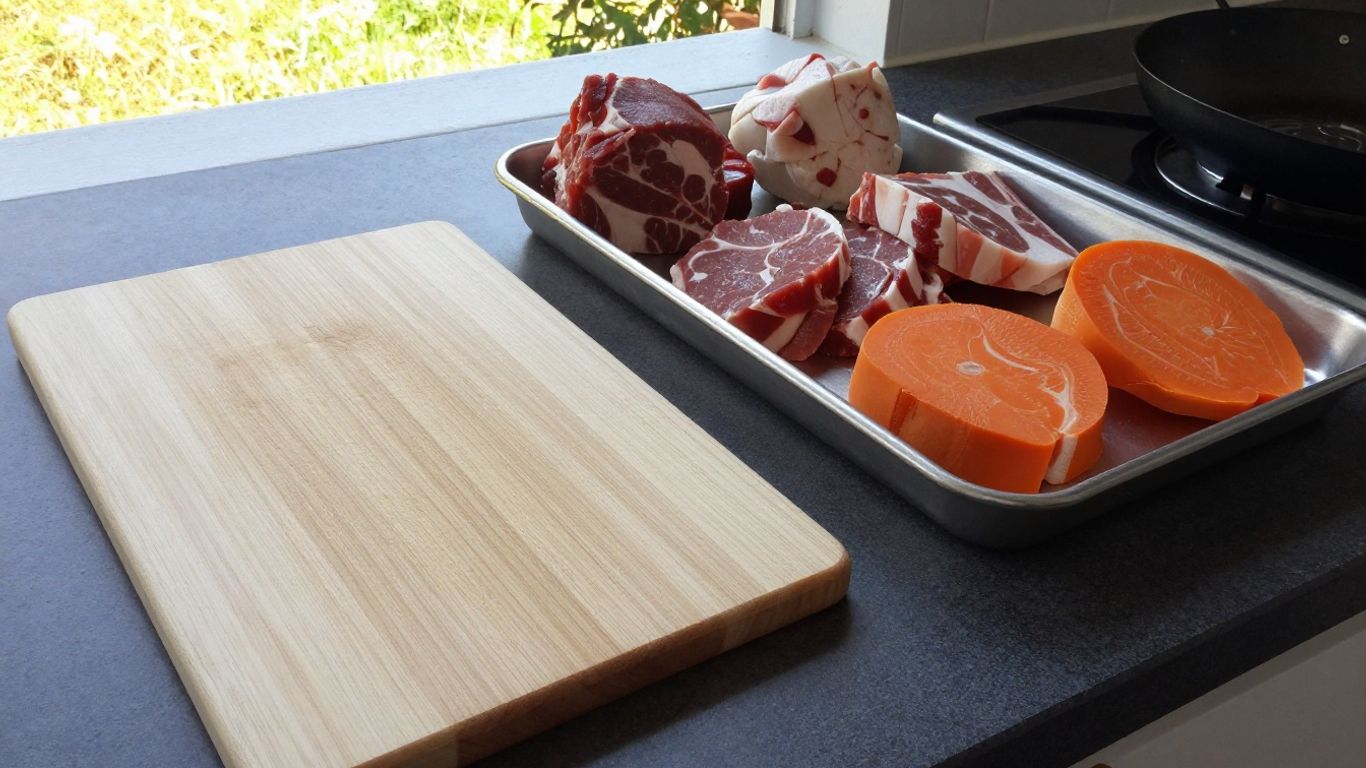
Keep raw meat away from ready-to-eat food, whether you are working outside or in the house. The USDA recommends preventing cross-contamination by keeping raw meat and its juices separate from foods that will be eaten without further cooking. Set up the board, utensils, and a place for used items before opening raw meat, so you do not have to improvise with messy hands.
Keep raw meat separate from ready-to-eat foods
A second board is useful if you plan to prep salad, bread, or cooked food while raw meat is waiting for the grill. Use separate plates and utensils as well, and wash your hands after handling raw meat. If you have only one board, finish the ready-to-eat ingredients first, then handle raw meat and clean the board and surrounding area before using them again. The goal is a clear sequence, not a complicated outdoor-kitchen system.
Use a groove or tray to catch meat juices
A groove can help keep liquid from running over the board’s edge, but it has limited capacity. Set a rimmed tray nearby to receive meat or catch drips while you move food to the grill. Avoid carrying a loaded board farther than necessary, especially if its surface is wet. A groove is a useful extra barrier, not a substitute for cleaning the counter and washing the board.
Prevent the board from sliding while you chop
Before you start, press lightly on the board and check for movement. If it slips, dry the counter and use a damp towel underneath; do not chop on a board that keeps shifting. A short setup check is easy to overlook when guests are waiting, which is usually when it is most useful. After you finish, clean both the board and any towel that contacted raw juices.
How do you clean and dry the board after cooking?
Wash the board soon after use with warm water and mild dish soap, then dry it rather than leaving it to sit wet. Raw meat calls for careful cleanup of the board, utensils, and nearby surfaces. The Board Room’s maple cutting board care guide covers everyday cleaning and maintenance in more detail. Good cleanup is simple, but it works best as part of the cooking routine rather than a task postponed until morning.
Wash it promptly with soap and water
Scrape away food scraps, then wash the board by hand with soap and warm water. Do not soak a wooden board or put it in the dishwasher. Wash the counter and utensils that touched raw food, too. If the board has a groove, clean along it instead of assuming a quick rinse has cleared the channel.
Sanitize after handling raw meat when needed
After raw meat, clean the board thoroughly and follow current food-safety guidance for sanitizing food-contact surfaces. Use a product or method intended for that purpose and follow its label directions. Keep raw-meat equipment separate from ready-to-eat food until it has been cleaned. This is particularly helpful outdoors, where a hose or quick wipe may seem tempting but can spread residue instead of removing it.
Dry both sides fully to limit warping and mildew
After washing, wipe the board and stand it upright so air can reach both sides. Do not leave one face against a damp counter or towel; trapped moisture dries slowly. Let it dry fully before putting it away. That routine limits prolonged uneven moisture exposure, though wood remains responsive to changes in humidity.
Where should you store the board between outdoor cooking sessions?
Bring the board inside after each use and store it somewhere clean and dry. That protects it from weather, dust, and long periods of direct sun or heat. A covered outdoor kitchen still experiences changing conditions, so an indoor storage spot is the safer default. Pick a place where the board can dry completely before it is put away.
Bring it indoors after each use
Once the board is clean and dry, move it inside instead of leaving it on the counter overnight. This reduces exposure to rain, outdoor debris, and temperature swings. If you use the board frequently, keep it near the kitchen entry or another convenient spot so carrying it in does not become a chore. Convenience is what makes a care habit stick.
Keep it away from damp cabinets and direct heat
Store a dry board upright or on a shelf with room for air to circulate. Avoid damp cupboards, the space beside a hot grill, and direct contact with a heat source. A board should not be wedged into a tight, wet corner immediately after washing. Let it finish drying first, then store it in a steady indoor spot.
Condition a wooden board when it starts to look dry
If the wood looks pale, feels rough, or seems dry, apply food-grade mineral oil or a suitable board conditioner according to its directions. A monthly check is a useful starting point, though use and climate affect how often a board needs attention. Do not use olive or vegetable oil for conditioning. A light, even application helps maintain the surface, but it does not make the board immune to moisture or humidity changes.
Choosing a cutting board for an outdoor kitchen
The best outdoor cutting board is one that fits your counter, stays stable while you work, and is easy to clean and carry indoors. Keep raw meat separate, wash the board promptly, dry both sides, and store it away from outdoor weather. Those habits matter more than leaving a board outside in hopes that it can handle every season.
Best for
- Hardwood: general chopping and slicing, if you wash it promptly, dry it fully, and bring it inside.
- Plastic: a dedicated raw-meat board; keep an eye on deep knife grooves.
- Grooves, handles, or nonslip feet: only when they solve a real problem at your outdoor counter.
Frequently Asked Questions
Can you leave a cutting board outside?
It is better to bring it indoors after each use. Sun, rain, heat, and changing humidity can affect a board and leave it dirty or damp between meals.
Is wood or plastic better for outdoor food prep?
Either can work if you use and clean it properly. Wood is a solid general-purpose surface, while a separate plastic board can be convenient for raw meat.
What size cutting board works for an outdoor kitchen?
Choose the largest board that fits your usable counter while leaving room for ingredients and safe movement. Measure the space before you buy, and account for where you will store the board.
Do I need a juice groove for grilling?
A groove can catch some juices from meat, but it has limited capacity. A rimmed tray nearby provides another place to catch drips and hold food.
How do you stop a cutting board from sliding?
Start with a clean, dry counter. If the board still shifts, place a slightly damp towel beneath it and check that it stays steady before chopping.
How should you clean a board after raw meat?
Wash it thoroughly with soap and water, then sanitize food-contact surfaces when needed by following appropriate product directions. Clean utensils and nearby surfaces that may have contacted raw juices as well.
How should you store a wooden cutting board?
Wash it, dry both sides fully, and store it indoors in a dry place with some airflow. Keep it away from damp cabinets and direct heat.
What should you do next?
- Measure the outdoor counter and leave room to work.
- Set up separate surfaces for raw meat and ready-to-eat foods.
- Wash the board promptly after cooking and dry both sides.
- Bring it indoors and keep it out of prolonged sun, rain, and standing moisture.
- Compare with cutting boards for a lake house or cabin kitchen and cutting boards for processing venison and wild game.
How this guide was put together
The American Made Cutting Boards team writes and fact-checks every guide on American Made Cutting Boards. Comparisons are based on maker specifications, published standards and food-safety guidance from sources such as the USDA, and each guide is reviewed and updated when specs or prices change. More about us.